Space
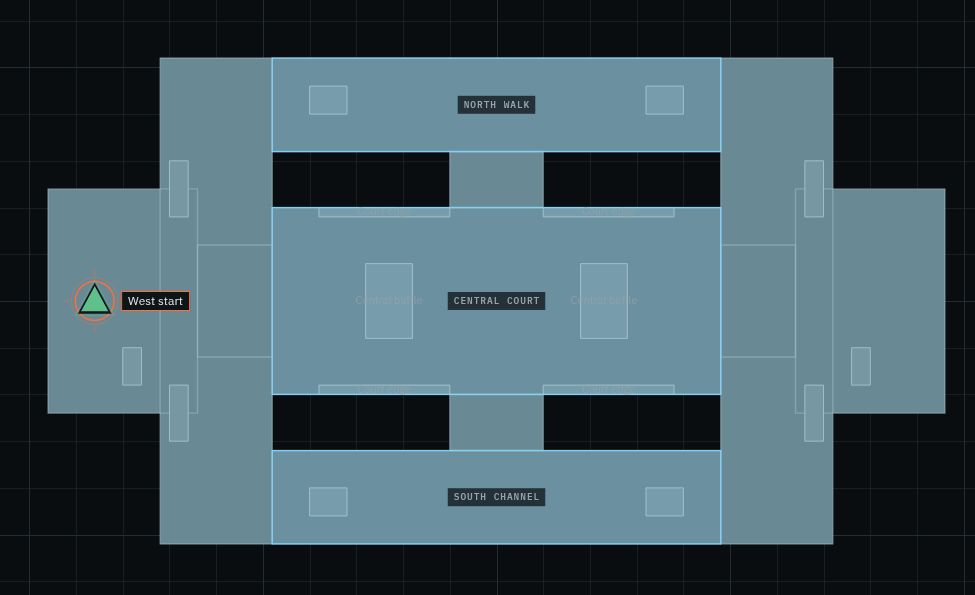
Make the layout legible.
Block out floors, rooms and cover at a consistent scale. Keep height changes and traversal connections in the same plan. Mirror geometry when the design calls for it.
A Luyudo Softworks experiment · Top-down maps
Draw the space. Map the choices. Show what happens where. Give your team a level plan they can explore, before you build it in-engine.
The editor is free to try. Production Pro is a separately priced interpreter toolkit, coming soon.
Export a standalone .html viewer to share, or a .datum file to keep editing.
 Open the interactive map ↗
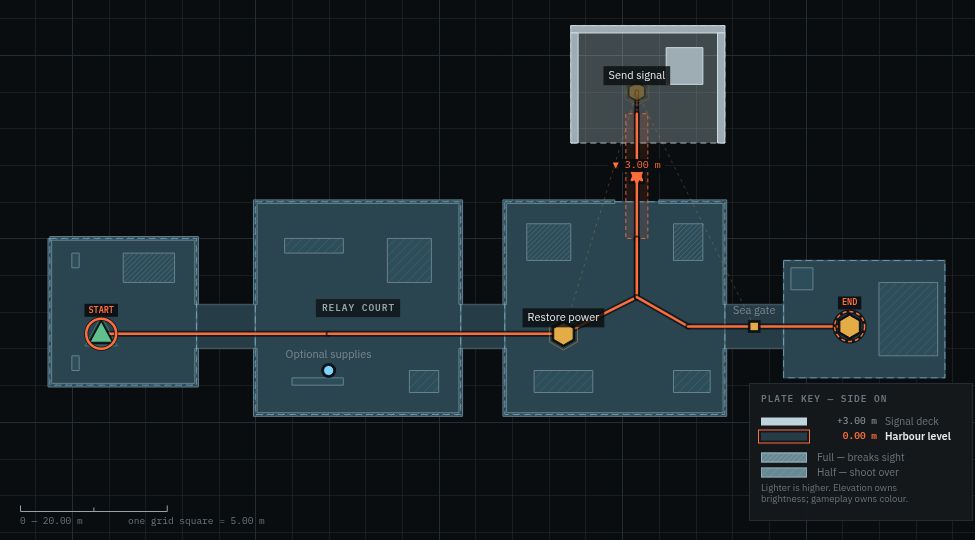
See the rooms, heights and connections.
Trace a route and inspect its gameplay beats.
Use saved views to see what the designer means.
A plan your team can read
A floor plan tells you where the rooms are. A Protomapper plan also carries the route, the encounter, the locked door and the decision that makes that room matter.
Block out floors, rooms and cover at a consistent scale. Keep height changes and traversal connections in the same plan. Mirror geometry when the design calls for it.
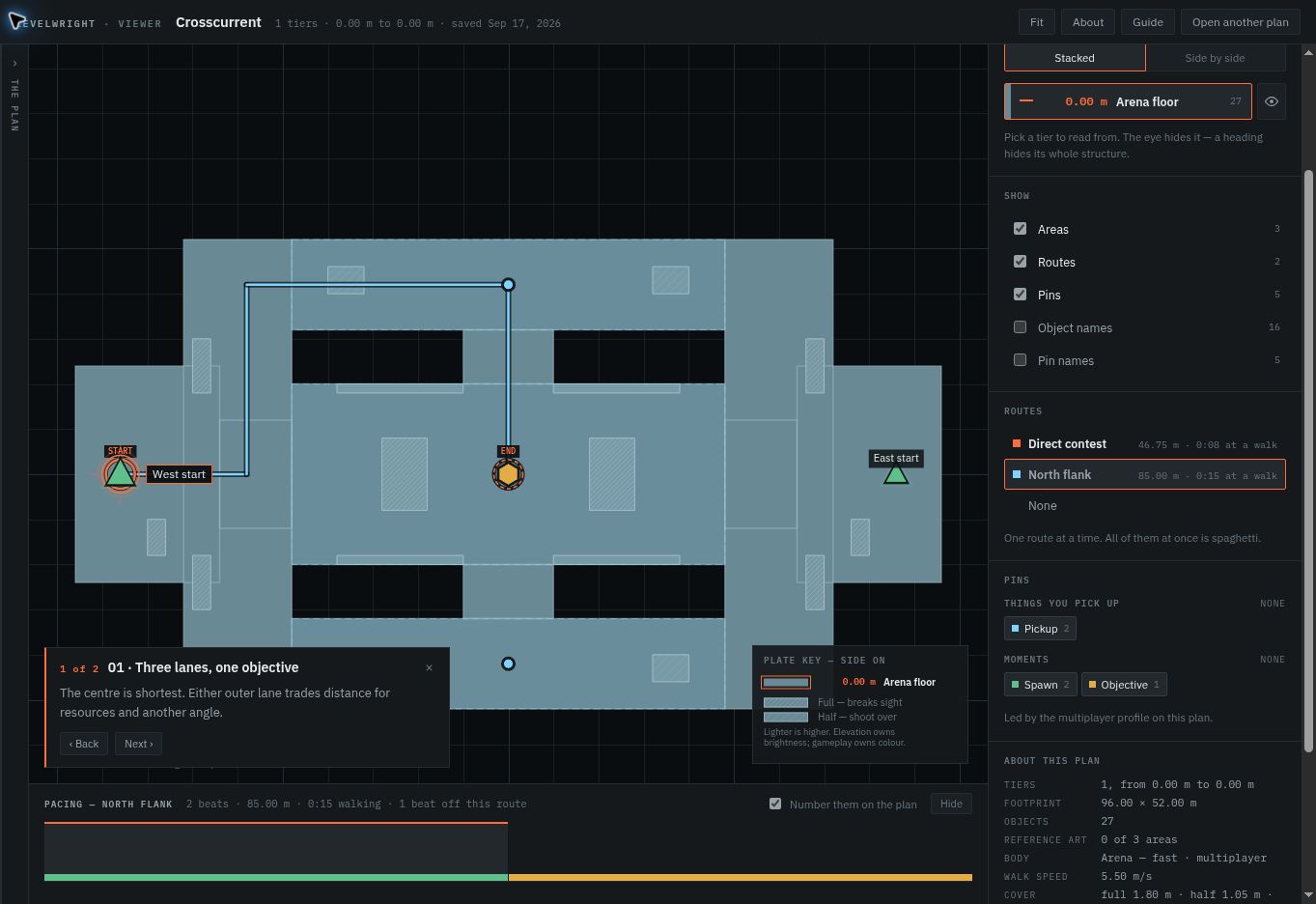
Make the direct approach and the flank easy to compare. For missions, distinguish required progression, an example playthrough and an optional detour.
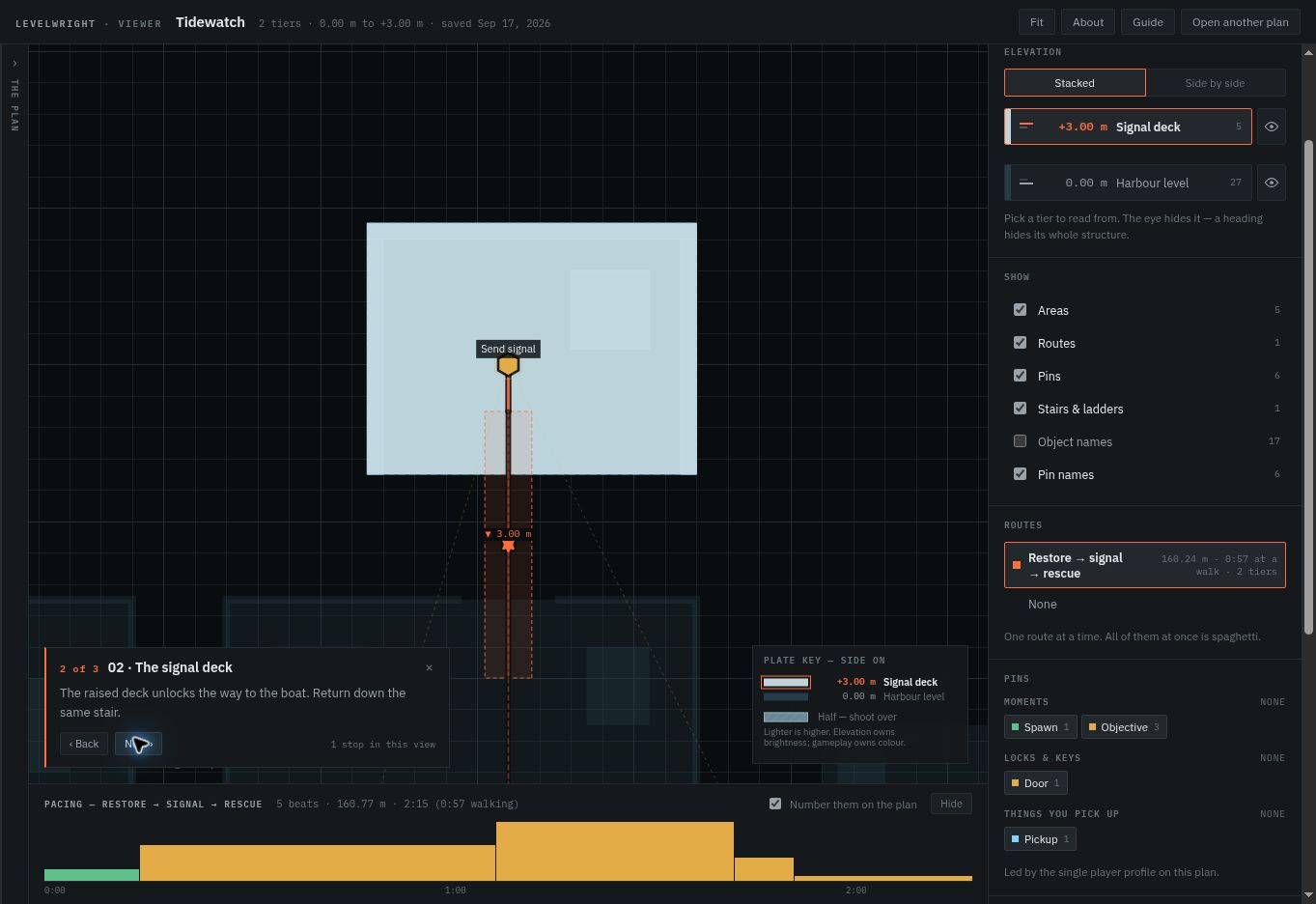
A named camera view, the right floor, a short caption. Give reviewers a useful place to start, then let them explore. Update the view as the layout changes.
Attach encounters, objectives and quiet moments to the map. Inspect authored intensity alongside estimated movement time. Give return visits their own notes and scores.
Explain what opens a door or advances an objective. Show whether it needs every prerequisite or any one of several alternatives.
Attach reference images to areas and keep them in the project. Export a read-only HTML Viewer so the recipient can explore the plan without opening the editor.
A planning tool for design conversations. Movement times depend on your chosen metrics; intensity is authored. Playtesting still happens in the game.
Case study / Lockdown Vessel
Our clearest production-workflow example so far: a shared Protomapper plan helped a designer and collaborator resolve layout, routes and room identity before building a sci-fi station in Unreal.
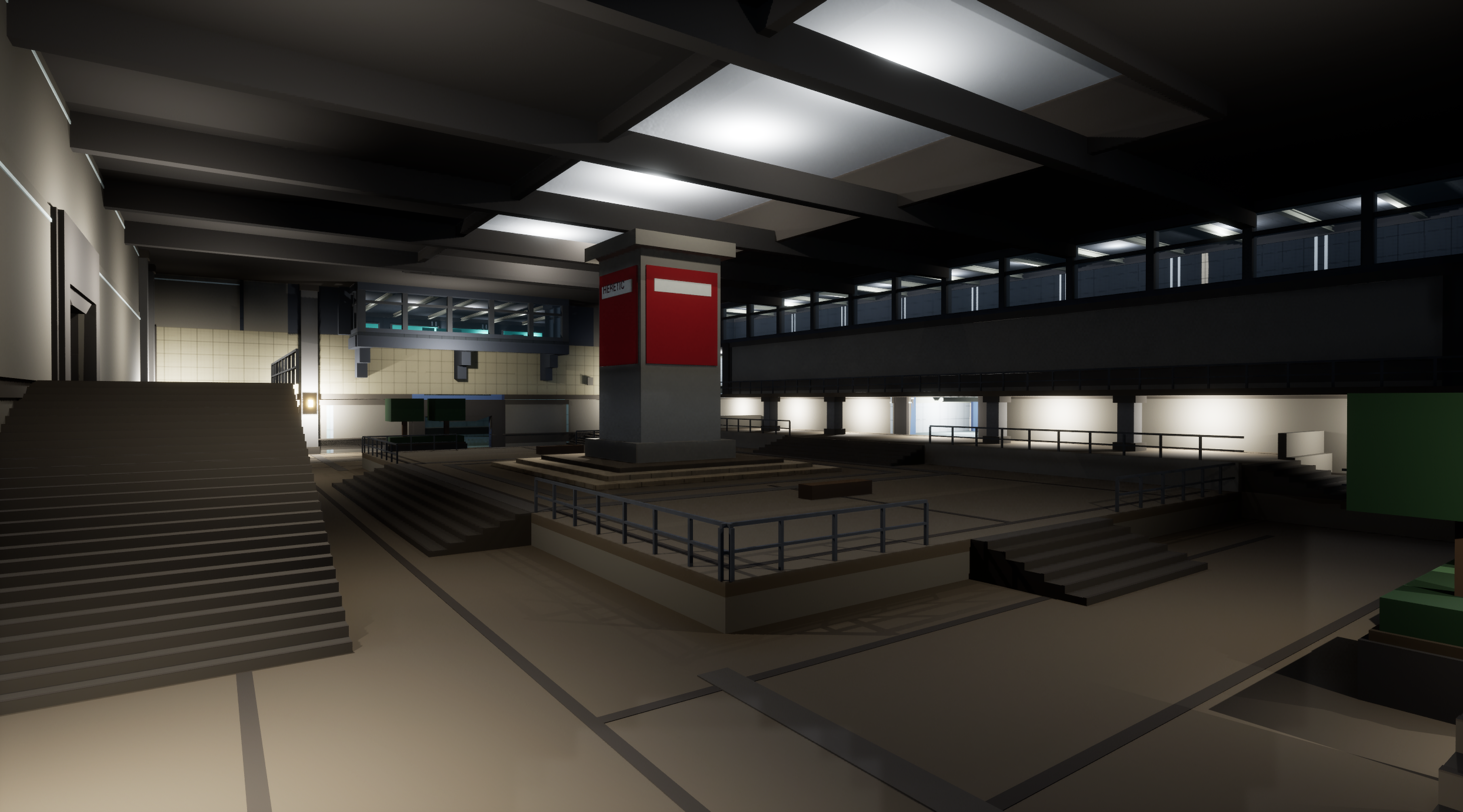
A friend's vertical-slice vision became a top-down gameplay plan, then an Unreal blockout through generation, screenshot review and human playtesting. Feedback became rules for the next iteration.
3–4 hours from nothing to a designed, completed blockout — including planning, feedback, generation and testing.
Read the case study ↗The full workflow
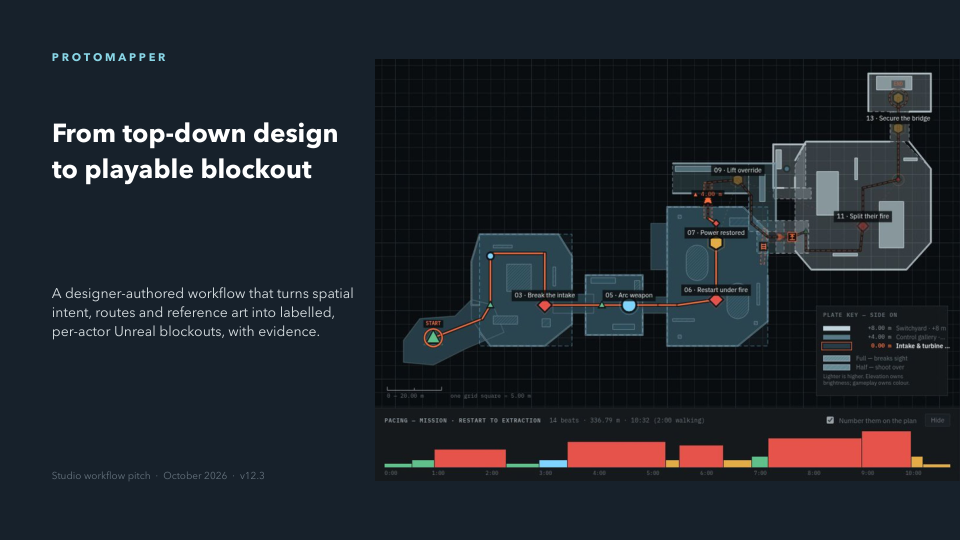
Explore the designer-first process, interpreter workflow, Unreal blockouts and review evidence in the 32-slide presentation.
Original example maps
A castle ascent and an industrial mission. Follow the routes, inspect encounters and elevations, and explore the reference art behind each plan.
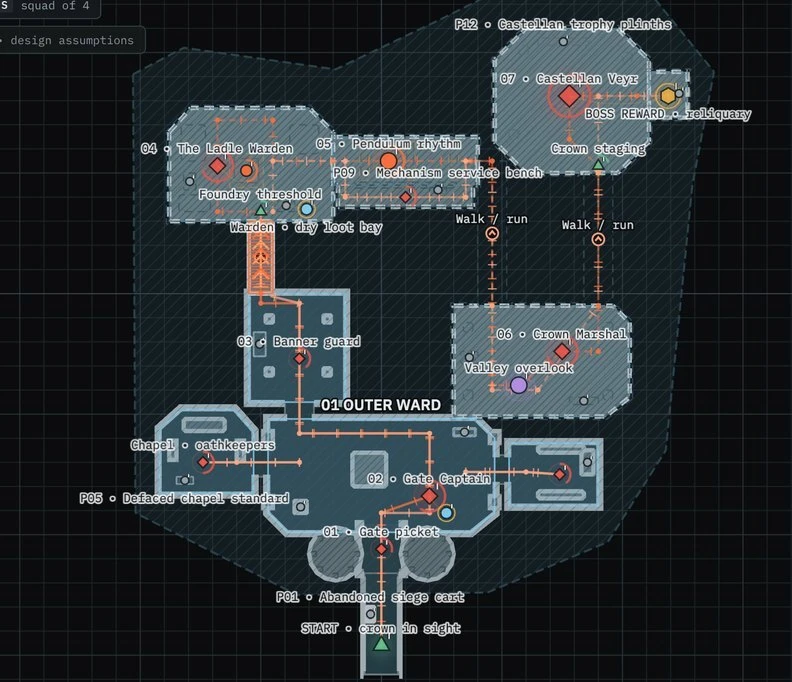
Climb from the outer ward through the foundry and pendulum gallery to the crown. Explore optional loot routes, hazards and staged encounters across the castle’s elevations.
Explore Cinder Crown ↗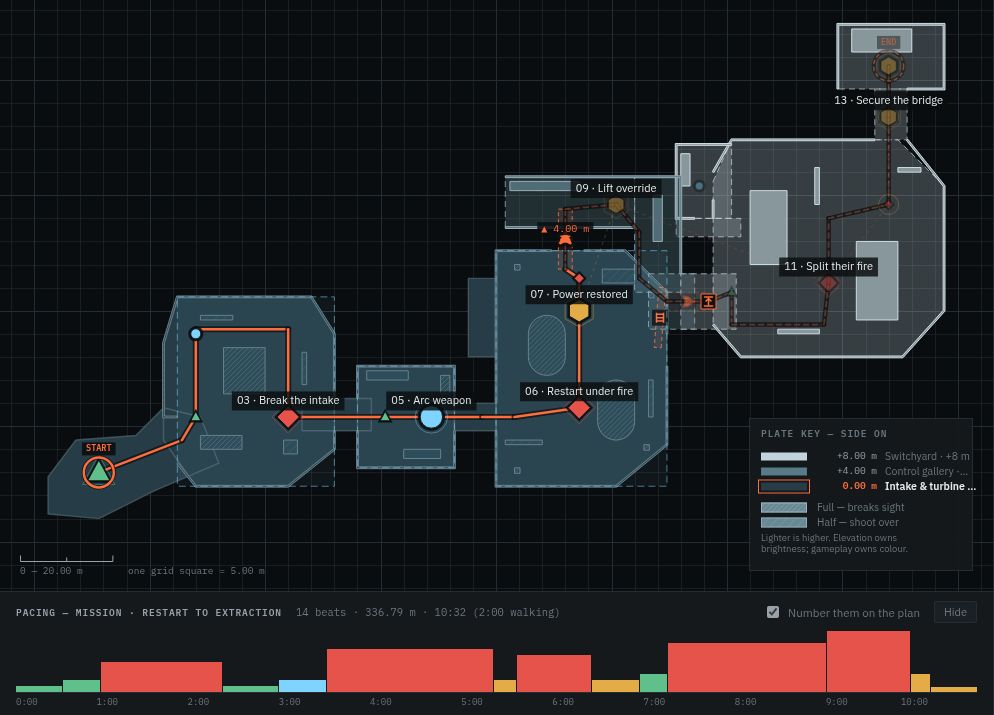
Restart power, climb to the control gallery and survive the switchyard. Follow three fights with changes in rhythm, recovery spaces and a final push to departure.
Explore Black Start ↗From an idea to a useful review
State the objective and the choice you want the player to make.
Draw the floor plan, set elevations and connect the playable areas.
Add routes, pins, prerequisites and the beats you want to discuss.
Save the useful views. Export Viewer and send the HTML file.
Production Pro · coming soon
Keep your layout, routes and design intent in the .datum. Bring the Pro interpreter toolkit to your agent to generate geometry, review the blockout and validate it in Unreal.
CAD $24.99
One-time purchase · lifetime licence to the supplied toolkit.
Checkout awaits approval
Interpreter tools, eight data-driven theme kits, a portable agent skill, an original example plan and Unreal handoff and validation templates.
Bring your own AI agent, compatible MCP setup and Unreal project. Review the prerequisites and project-specific validation requirements.
For designers, students and their teams